
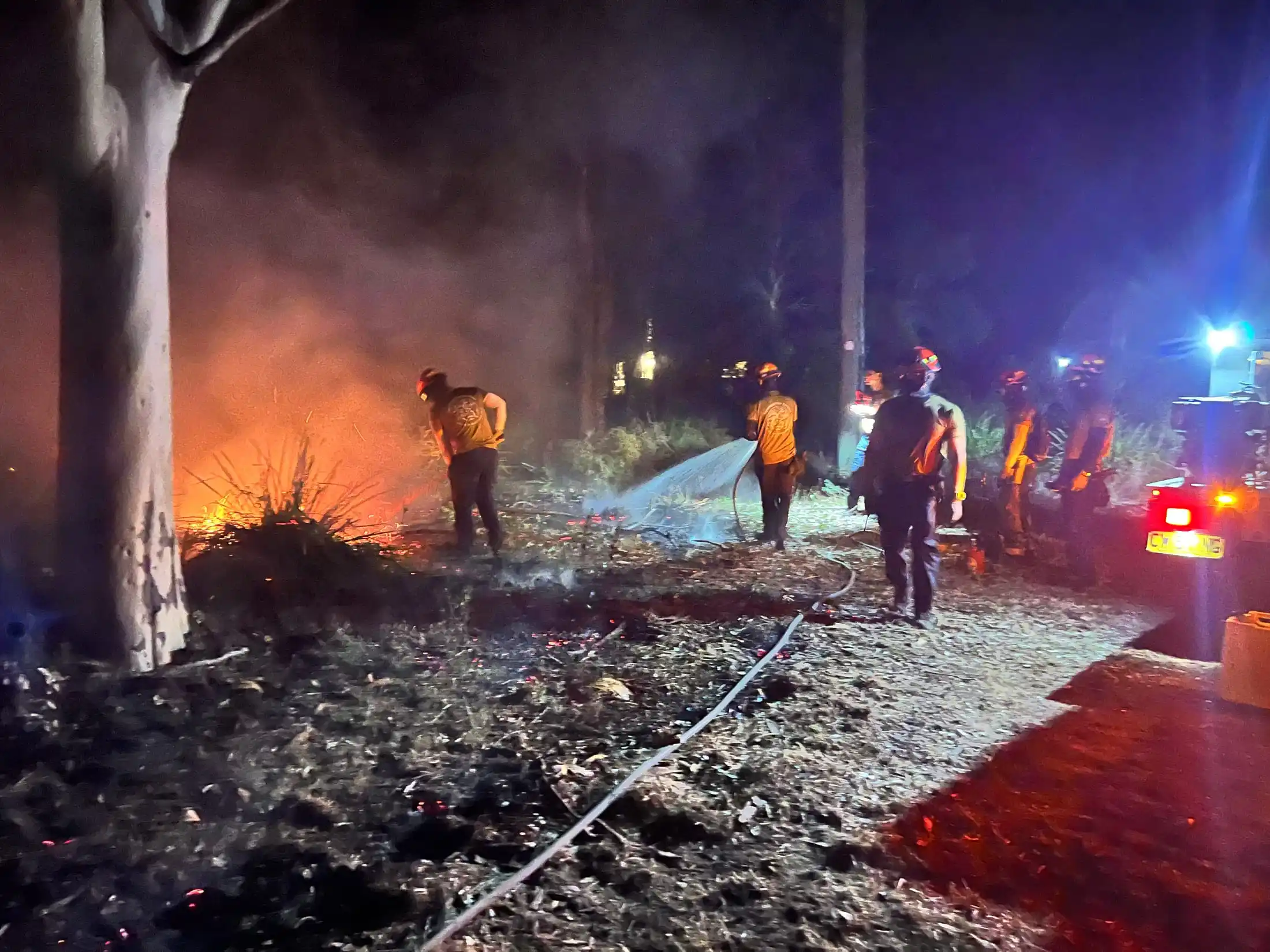
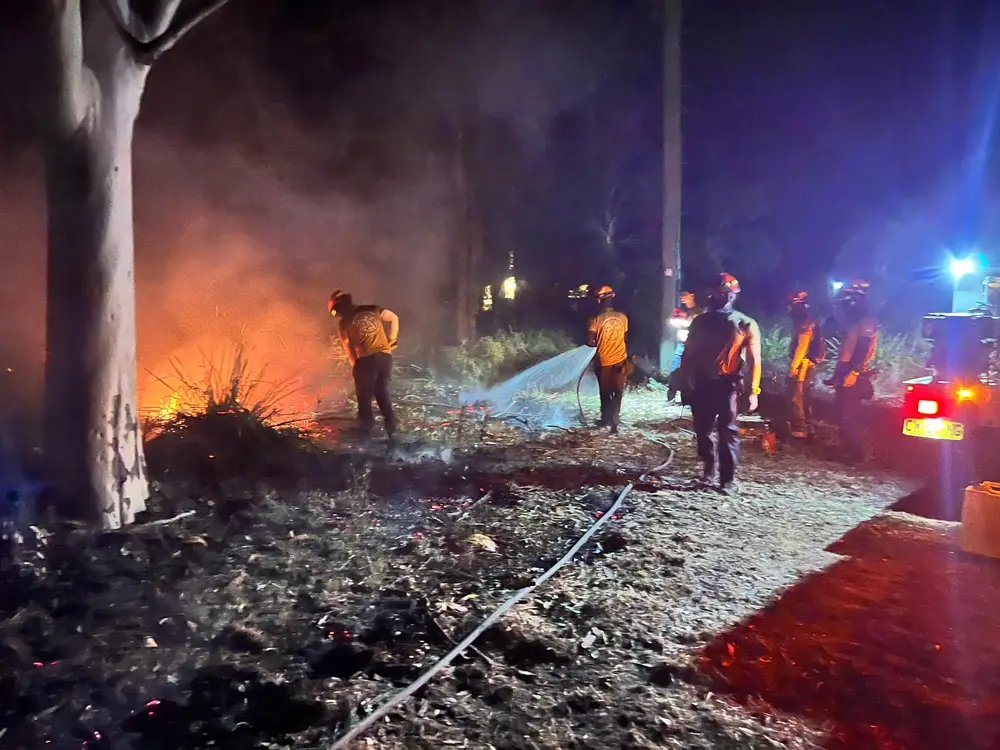
Every bushfire response begins with one priority: getting every crew member home. Before anyone works a fire edge with EMTRAC, they complete a Bushfire Safety & Survival induction, a short narrated module on EMLearn with a knowledge check at the end. It is not a firefighting skills course. It is the safety floor that every skills course sits on. These are the seven things it covers.
1. A shared duty of care
Under work health and safety law, everyone on the fireground has a duty of care to themselves and the people around them. That means behaving safely, keeping training current, following procedure and managing fatigue, and it applies to agency crews, contractors and landholders alike.
2. Aware, Assess, Address
Risk management is a four-step cycle: identify the hazard, assess the risk, control it to as low as reasonably practicable, then monitor and review. On the fireground it compresses to three words. Be aware of the hazards. Assess the risks. Address the issues. A wind change or a shift change means running the cycle again.
3. Protective clothing is the first line of defence
The minimum dress standard for firefighting operations is Level 1 trousers and tunic, a cotton or Nomex shirt underneath, firefighting-rated boots, gloves, eye protection, a helmet and respiratory protection. T-shirts, shorts and joggers have no place anywhere near a fireground. Protective clothing damaged by a hazard is not a failure. It may have done its job, but it does mean the task is reviewed before anyone goes back in.
4. Four everyday hazards
Smoke, falling limbs, radiant heat and poor visibility are the threats crews meet at almost every fire. Each has a habit that reduces the risk: work upwind and rest in clean air; keep looking up and listen for cracking timber, because limbs fall long after the front has passed; keep at least four times the flame height away from radiant heat; and drive with lights on, pulling over with hazard lights if visibility closes in. At planned burns, crews also watch for burn escape and smoke crossing public roads.
5. Your body is equipment
Protective clothing drives up body heat, so heat stress and dehydration build fast. Fatigue is just as dangerous: after 17 to 19 hours awake, performance is impaired to about the same degree as a blood alcohol level of 0.05 per cent, and fatigued people are poor judges of their own fatigue. Crews are taught to watch for it in each other, and to seek support if the mental load of an incident lingers.
6. LACES and the Dead Man Zone
Situational awareness is knowing what the fire is doing now and what it will do next. LACES is the crew safety check: Lookouts, Awareness, Communications, Escape routes and a Safety zone, re-run every time conditions change. The Dead Man Zone is the unburnt ground beside a fire edge that a wind change can burn through in under five minutes, the minimum time a crew needs to reach safety. The safest place to work is on burnt ground, well clear of it.
7. Survival and communication
If things go wrong, a handful of decisions save lives. On foot, move onto bare or burnt ground, work across the slope toward the back of the fire and shelter from radiant heat. In a vehicle, call it in first, park on clear ground facing away from the fire, close everything up and get low under a blanket. Under an aircraft drop, clear your tools, crouch and protect your head. Never run uphill, never run through flames you cannot see through, and never shelter in an elevated water tank.
Good outcomes run on clear communication. Every incident works to an Incident Action Plan, large incidents are divided into sectors with their own radio channel and commander, briefings follow SMEACS, and the emergency call stops all other traffic. Every job ends with a debrief: what went well, what did not, and what we will do differently next time.
That is the induction. Everything EMTRAC trains beyond it, from crew-level wildfire programs to the international residential courses, builds on it.